
“Food unites people” — this expression is nowhere as true as it is in Georgia. One of the main values of Georgian culture is relationships between people, family, and hospitality, and at the center of all this stands the Georgian supra (feast). For centuries, it was at the supra that friendship was created, family and social connections were strengthened, important matters were decided, and the most important events of life were celebrated. In Georgia, receiving a guest is considered a special honor. There is an ancient belief that “a guest is sent by God,” therefore offering the best dishes to a guest is not only a culinary tradition, but also an expression of respect and family dignity. That is why Georgian cuisine is not only food — it is part of the country’s history, culture, and way of life. Georgian cuisine is considered one of the most diverse and distinctive culinary traditions in the world. Its formation took place over thousands of years. Georgia, located in the center of the Caucasus, has for centuries been a crossroads of different cultures and trade routes. Although Georgian cuisine was influenced to some extent by Persian, Byzantine, Anatolian, and Middle Eastern cultures, it has preserved its own unique character and traditions.
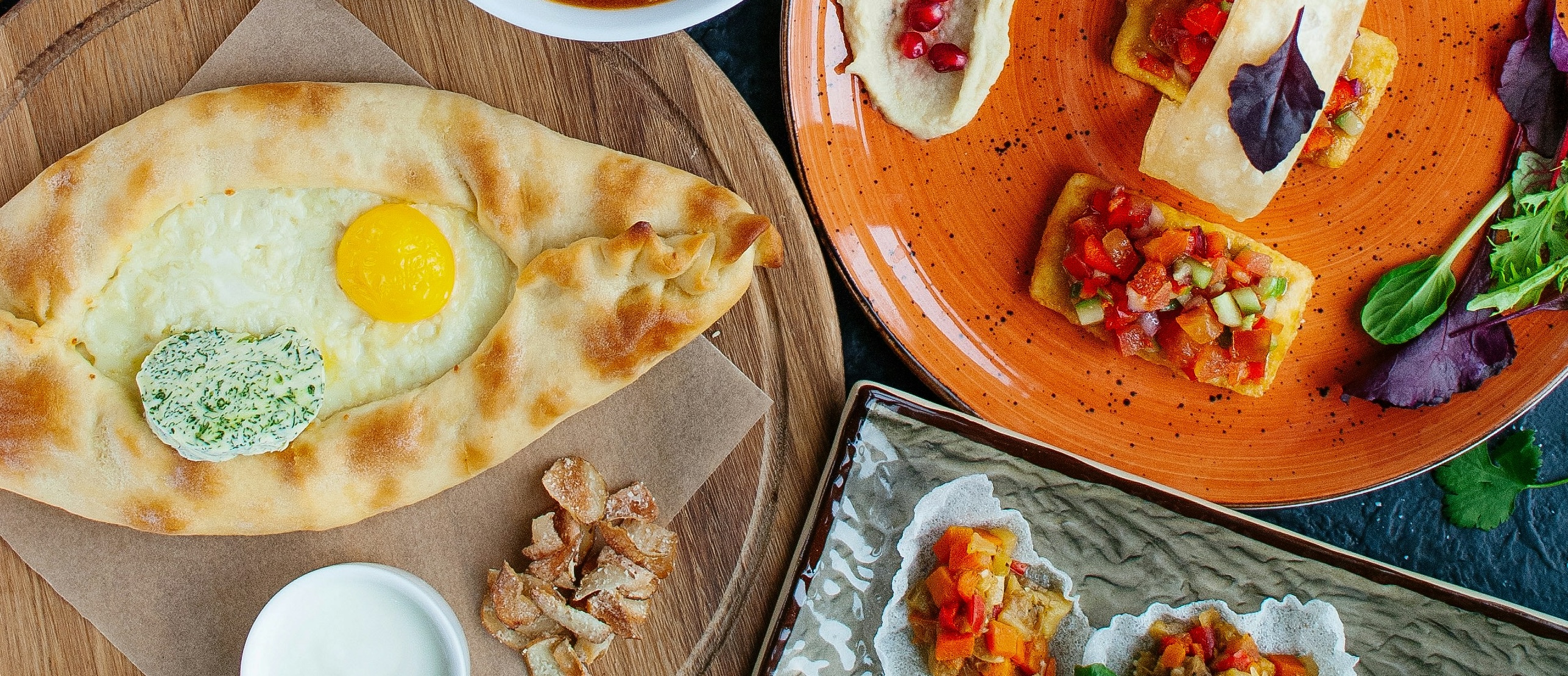
One of the most interesting features of Georgian cuisine is its regional diversity. Almost every region has its own dishes, cooking methods, and taste characteristics. Samegrelo is known for spicy, aromatic, and cheese-based dishes. From there come famous dishes such as elarji, ghomi, kupati, gebjalia, and satsivi. Megrelian cuisine widely uses spices, adjika, walnuts, and cheese. Imereti is known for its soft and balanced flavors. Imeretian khachapuri is one of the most popular dishes in the country. Adjara is a coastal region, whose most famous culinary symbol is Adjarian khachapuri — a boat-shaped cheese bread with egg and butter. Kakheti, considered the homeland of wine, is especially known for mtsvadi (grilled meat), chakapuli, Kakhetian bread, and centuries-old winemaking traditions. In mountainous regions — Khevsureti, Pshavi, Tusheti, and Svaneti — a more hearty and energetic cuisine developed, adapted to the conditions of mountain life.
The uniqueness of Georgian cuisine is largely defined by its unique spices. The most famous Georgian spice is blue fenugreek (utskho suneli), which is rarely used in other world cuisines. It has a light, slightly nutty aroma and is an essential ingredient in many Georgian dishes. Also widely used is khmeli suneli — a mixture of aromatic spices that combines blue fenugreek, coriander, marigold, basil, dill, and other plants. Georgian cuisine is distinguished by the abundance of fresh herbs. Cilantro, tarragon, basil, parsley, garlic, pomegranate, and various wild plants are found in almost every regional dish. There are very few countries in the world where walnuts play such an important role as in Georgia. Walnuts are used in sauces, salads, pkhali, satsivi, eggplant with walnuts, and dozens of other dishes. Together with garlic, spices, and vinegar, they create unique flavors characteristic of Georgian cuisine.
In Georgia, bread is held in special respect. Traditional Georgian bread is baked in a tone (clay oven) and is still part of everyday life in almost every region of the country. Also remarkable is the variety of Georgian cheese. Each region has its own type of cheese, which is one of the important characteristics of Georgian cuisine.
In traditional Georgian cuisine, desserts take a relatively small place, because historically sweets were prepared for special occasions. The most famous Georgian dessert is churchkhela — a string of nuts dipped in thickened grape juice called tatara. Also popular is gozinaki — walnuts cooked in honey, which is traditionally an essential part of the New Year table.
Traditional Georgian Cuisine
To fully understand Georgian cuisine, it is essential to become familiar with the tradition of the supra (feast). A supra is not only a meal. It is a social and cultural event where people gather, share stories with each other, sing, make toasts, and celebrate important moments of life. The supra is led by a tamada (toastmaster), who, through toasts, unites the guests and creates a special atmosphere. It is precisely the supra, wine, music, and dishes that create the experience that guests of Georgia remember the longest. Georgian cuisine is not only a combination of flavors — it is a living expression of the country’s history, nature, traditions, family values, and hospitality. That is why, for many travelers, getting to know Georgia begins first with experiencing the Georgian supra and Georgian cuisine.
Georgians are known for their love of meat and cheese, and this is clearly seen in traditional Georgian food. The most popular national dishes are:
Khachapuri Khachapuri is one of the most famous and beloved dishes of Georgian cuisine, which for centuries has remained an inseparable part of the Georgian supra. Its name consists of two words: “khacho” (curd/cheese) and “puri” (bread), which directly reflects its main ingredients. In Georgia, there are many regional varieties of khachapuri. The most famous are Imeretian khachapuri, Megrelian khachapuri, which is additionally covered with cheese, and Adjarian khachapuri, which has a boat shape and is served with egg and butter.
Khinkali Khinkali is one of the most famous dishes of Georgian cuisine. Its origin is connected to the mountainous regions of eastern Georgia. At first, it was everyday food for shepherds and mountain inhabitants, but over time it spread throughout the country and became a symbol of Georgian cuisine. Today in Georgia there are many “khinkali houses” and restaurants where guests can taste not only traditional meat khinkali, but also versions with cheese, mushrooms, potatoes, and other fillings. In recent years, chocolate khinkali has also become popular in Tbilisi, representing a modern interpretation of the classic dish.
These dishes are so popular that in Georgia there are restaurants and cafés that prepare only khachapuri and khinkali. However, Georgian cuisine is much more diverse than just meat and cheese.
Vegetarian Food in Georgia: Fresh, Healthy & Delicious Options
Although Georgia is often associated with meat dishes, traditional Georgian cuisine also includes many vegetarian and vegan dishes. Pkhali, eggplant with walnuts, lobio, Georgian salad, spinach dishes, and various vegetable assortments have been an inseparable part of the Georgian supra for centuries. Khachapuri is a vegetarian dish, and its various forms are found in almost every region. Popular vegetarian Georgian dishes are:
Eggplant with walnuts One of the most beloved vegetarian dishes in Georgia, which combines fried eggplant with a walnut filling. It is liked by almost everyone.
Ajapsandali Ajapsandali is a traditional Georgian vegetable stew made with eggplant, tomato, pepper, and herbs. It has regional variations depending on the method of preparation.
Pkhali Pkhali is a famous Georgian vegetarian dish made with spinach, walnuts, onion, garlic, and herbs. It is usually served in the form of small balls and is garnished with pomegranate seeds.
Lobio and Lobiani Lobio is a very important dish in Georgian cuisine.
Lobio: a traditional bean stew, often cooked in a clay pot
Lobiani: a bean-filled pie, one of the most popular fast foods in Georgia. Lobiani is widely sold in bakeries and restaurants, however sometimes it may contain meat, so vegetarians should check the ingredients.
Vegetarian & Vegan Restaurants in Tbilisi
In recent years, demand for healthy and vegan food has increased in Tbilisi. As a result, many modern restaurants and cafés have appeared that offer vegan versions of traditional Georgian dishes.
Café Leila (vegetarian restaurant) Café Leila is one of the most popular vegetarian restaurants in Tbilisi. It offers vegetarian versions of traditional Georgian dishes, where meat is often replaced with mushrooms. The café is located in the heart of Old Tbilisi, in a 19th-century historic building that was previously a confectionery shop. Its architecture and central location make it very popular.
Kiwi Vegan Café Kiwi is a well-known vegan café in Tbilisi, located on Machabeli Street in the historic district of Sololaki. The menu includes: vegan burritos, vegan burgers, vegan pizzas, spaghetti, soups, and salads.
Namu Vegan Restaurant (Vake) Namu is a modern vegan restaurant in Vake, on Abashidze Street. It is not only a restaurant but also a shop where vegan desserts can be purchased.
OTHER VEGAN PLACES IN TBILISI: SEED, Vegan Place, Veggie Corner, Goby.
Final Thoughts: Georgian Food for Every Taste
Georgian cuisine is a perfect balance between rich meat-based dishes and fresh vegetarian flavors. Whether you prefer traditional khachapuri and khinkali or plant-based meals made from vegetables, walnuts, and herbs, Georgia offers something for everyone. With its growing vegan scene in Tbilisi and deep-rooted culinary traditions, Georgia has become a must-visit destination for food lovers from around the world.